

Quick Answer
Whole-body MRI may help visualize many areas of the body in one session and can sometimes identify masses, lymph node changes, or other findings that need closer evaluation. However, it is not a complete cancer screening test, cannot detect every type of cancer, and should not replace established screening methods such as mammograms, colonoscopies, cervical screening, or other tests recommended by your doctor. Major cancer screening guidelines still recommend specific tests based on age, sex, personal risk, and cancer type.
For people with family history, elevated risk, or proactive health-screening goals, whole-body MRI may be discussed as an additional imaging option. The decision should be made with a doctor who understands your personal and family health history.
Whole-Body MRI for Cancer Screening: A Balanced Overview
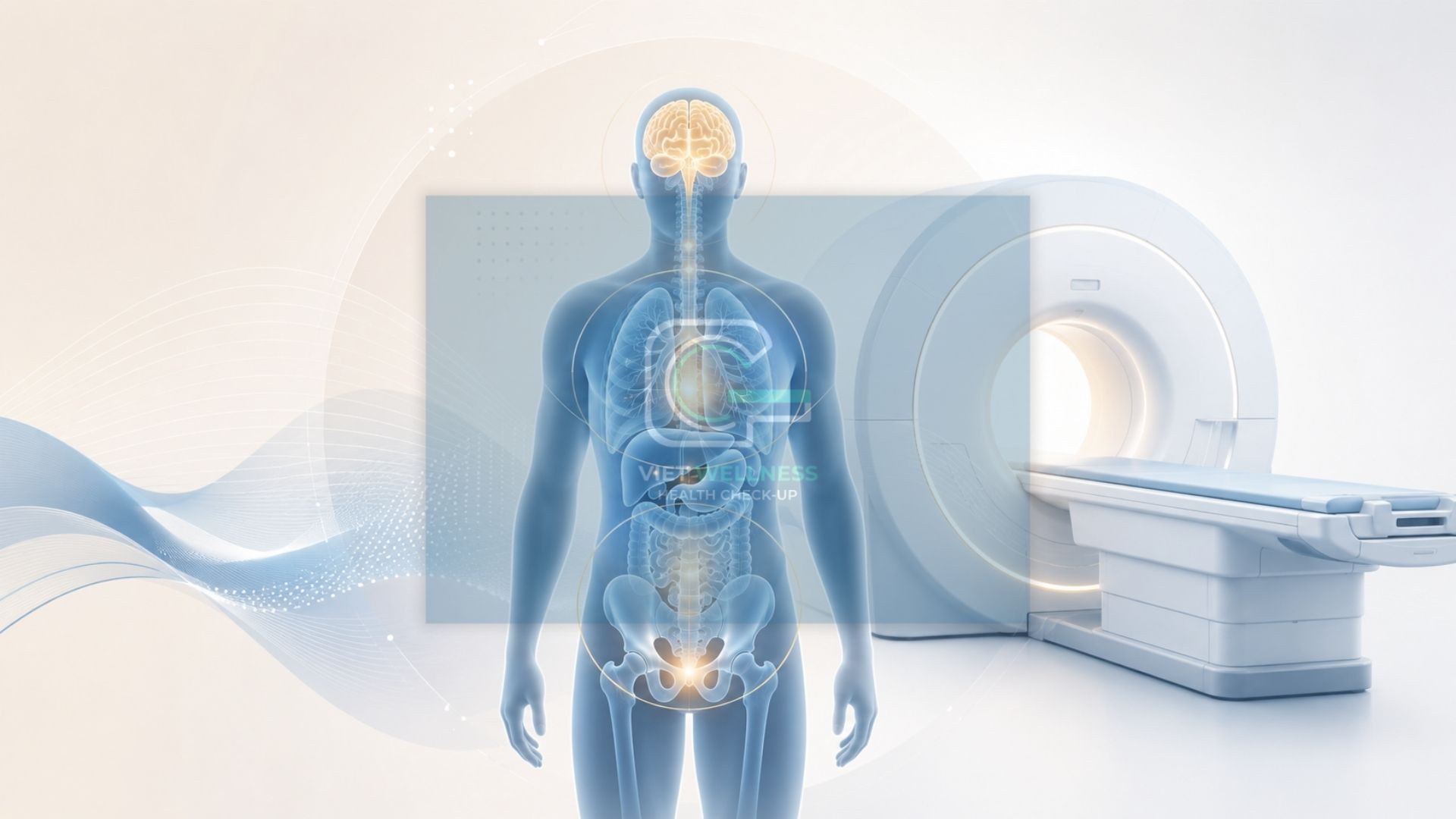
Whole-body MRI is increasingly discussed as a tool for proactive health screening and early cancer-related evaluation. It is easy to understand why: one scan can visualize many body regions, MRI does not use ionizing radiation, and it can provide detailed soft-tissue images across the brain, neck, chest, abdomen, pelvis, spine, and other structures.
But the most important question is not simply, “Can MRI see cancer?”
A better question is:
What can whole-body MRI realistically help show, what can it miss, and how should it fit alongside standard cancer screening tests?
This article gives a balanced overview of whole-body MRI for cancer screening, including where it may help, where it is limited, who might consider it, and why medical guidance matters before and after the scan.
How Whole-Body MRI May Help with Cancer Screening
Whole-body MRI uses magnetic fields, radio waves, and computer processing to create detailed images of internal body structures. MRI can help doctors assess organs, soft tissues, and certain tumor-related findings when clinically appropriate. In a preventive or cancer-related screening context, whole-body MRI may help visualize findings that need closer evaluation, but it should not be treated as a complete cancer screening test.
Whole-body MRI may help doctors visualize:
Masses or structural abnormalities
Enlarged lymph nodes
Bone marrow or soft-tissue changes
Certain organ abnormalities
Findings that may need closer imaging or specialist follow-up
For many people with a family history of cancer, the goal is not to replace standard screening, but to gain a broader view of their health and know what may need closer attention.
Whole-body MRI may be worth discussing if you want a broader overview of your body rather than imaging focused on only one area.
However, this does not mean whole-body MRI is a complete cancer screening solution. It is best understood as a broad imaging tool that may identify certain findings requiring follow-up, not as a test that can rule out all cancers.
What Whole-Body MRI Cannot Replace
Whole-body MRI should not replace established, guideline-based cancer screening tests.
Different cancers are best screened in different ways. For example, breast cancer screening often relies on mammography, colorectal cancer screening may involve stool-based tests or colonoscopy, and cervical cancer screening uses HPV testing and/or Pap testing depending on the guideline and patient context. The American Cancer Society provides cancer screening recommendations by age and cancer type, which shows why cancer screening is not one single test for the entire body.
Whole-body MRI should not replace:
Mammograms for breast cancer screening
Colonoscopy or stool-based tests for colorectal cancer screening
Pap smear or HPV testing for cervical cancer screening
Skin checks for suspicious skin lesions
Prostate evaluation when clinically appropriate
Symptom-based diagnostic testing ordered by a doctor
A normal whole-body MRI can be reassuring, but it does not prove that no cancer is present.
An unusual MRI finding also does not automatically mean cancer. It may be benign, inflammatory, anatomical, or something that simply needs monitoring.
This does not mean whole-body MRI has no role. For selected people, it may provide an additional layer of imaging insight, especially when they understand its limits and use it alongside standard screening rather than instead of standard screening.
What Types of Cancer Can Whole-Body MRI Miss?
Whole-body MRI does not detect every cancer equally well.
Some cancers may be too small, too early, or located in tissues that are better evaluated using another screening method. For example, early mucosal cancers in the colon, small skin cancers, some early breast cancers, cervical precancerous changes, and certain blood-related cancers may not be reliably detected by a general whole-body MRI scan.
This is why whole-body MRI should not be used as a stand-alone cancer screening plan.
It may offer additional imaging information, but it should sit alongside standard screening recommendations, personal risk assessment, family history, symptoms, and doctor guidance.
Who Might Consider Whole-Body MRI for Cancer Screening?
Whole-body MRI may be worth discussing with a doctor if you are looking for a broader preventive health overview and understand both the benefits and limitations.
Some people who may consider discussing whole-body MRI include:
People with a significant family history of certain cancers
People who have already completed their recommended standard screening tests
Adults interested in proactive preventive health monitoring
Overseas Vietnamese returning to Vietnam for health screening
Expats living in Vietnam who want English-supported medical coordination
Busy professionals or travelers who want a time-efficient overview while in Ho Chi Minh City
Still, whole-body MRI is not for everyone. The decision should be personal, risk-based, and discussed with a qualified medical professional.
Who Should Not Rely on Whole-Body MRI Alone?
Whole-body MRI should not be your only screening method if you are already due for a specific cancer screening test recommended by your doctor.
You should not rely on whole-body MRI alone if:
You are due for a mammogram, colonoscopy, cervical screening, or another standard screening test
You have symptoms that need targeted diagnostic evaluation
Your doctor has recommended a specific scan, endoscopy, biopsy, or blood test
You believe a normal whole-body MRI means “no cancer”
You want one scan to replace all future screening
The American College of Radiology states that there is not enough evidence to recommend screening total-body MRI for people with no symptoms, no risk factors, and no family history suggesting underlying disease or serious injury.
That does not mean whole-body MRI has no value. It means the test should be used carefully, with realistic expectations, and with appropriate medical guidance.
False Positives, Incidental Findings, and Over-Testing
One of the main concerns with broad screening is that it may find something unexpected.
These findings are sometimes called incidental findings. Some are important. Others are harmless or unclear. In some cases, they may lead to additional imaging, blood tests, specialist visits, or follow-up scans.
A review of whole-body MRI for preventive health screening found that incidental findings and false-positive findings are real considerations in asymptomatic adults.
This is why pre-scan expectation setting matters.
Before getting a whole-body MRI, it is helpful to understand:
A finding does not always mean cancer
A normal scan does not rule out all cancer
Follow-up testing may be needed
Some findings may simply be monitored over time
Results should be interpreted by qualified medical professionals
The goal is not to create fear. The goal is to make sure the scan leads to clarity, not confusion.
What Happens If Something Is Found?
If a whole-body MRI identifies a finding that needs a closer look, the next step depends on what was seen, where it was found, and your personal health context.
Your doctor may recommend:
Targeted MRI or ultrasound
CT scan, if appropriate
Blood tests, including selected tumor markers only when clinically relevant
Specialist referral
Endoscopy or colonoscopy
Short-term monitoring
Comparison with previous imaging
An abnormal finding is not a diagnosis by itself. It is a signal that may need medical interpretation and, sometimes, additional evaluation.
At VietWellness Tour, the result process is explained clearly and realistically. At VietWellness Tour, clients receive results within 24 hours by email, including full MRI files, a detailed report, and a health explanation based on the MRI results. If blood tests are required or included, the explanation also covers those results.
How VietWellness Tour Supports Preventive MRI Screening in Ho Chi Minh City
VietWellness Tour offers doctor-led whole-body MRI screening in Ho Chi Minh City for international travelers, overseas Vietnamese, expats, and proactive health-conscious clients.
For cancer-related screening concerns, the service is designed to support three practical needs:
Medical clarity: The MRI process is coordinated with qualified diagnostic imaging professionals, and results are explained in context. Whole-body MRI is positioned as an additional preventive screening tool, not as a replacement for guideline-based cancer screening or clinical diagnosis.
Concierge coordination: Clients receive support with confirmation, contract arrangement, USD 49 deposit, hotel pickup, hospital transfer, MRI scan coordination, and return to the hotel.
Clear result delivery: Results are delivered by email within 24 hours, including full MRI files, a detailed report, and a health explanation based on the MRI results. If blood tests are required or included, the explanation also covers those results.
This means you are not left to arrange the hospital visit, manage language barriers, or interpret the result pathway alone.
Talk to a Doctor Before You Decide
Whole-body MRI for cancer screening is not a simple yes-or-no decision.
For some people, it may provide useful additional information. For others, standard cancer screening tests or targeted diagnostic evaluation may be more appropriate.
Before deciding, talk with a doctor about:
Your age
Personal medical history
Family cancer history
Current symptoms, if any
Previous imaging or screening results
Which standard screening tests you are due for
Whether whole-body MRI would add meaningful value
If you are considering whole-body MRI while in Ho Chi Minh City, VietWellness Tour can help you speak with a medical coordinator first, understand the process, and decide whether preventive MRI screening fits your situation.
Frequently Asked Questions
Can a whole-body MRI detect all types of cancer?
No. Whole-body MRI cannot detect every type of cancer, and some cancers are better found through specific screening tests. It may identify certain masses or structural findings, but it should not be relied on as a complete cancer screen.
Is whole-body MRI a substitute for mammograms or colonoscopies?
No. Whole-body MRI should not replace established cancer screening tests recommended by your doctor. Mammograms, colonoscopies, cervical screening, and other tests may still be necessary depending on your age, risk factors, and medical history.
Can a normal whole-body MRI rule out cancer?
No. A normal whole-body MRI can be reassuring, but it does not guarantee that no cancer is present. Some cancers may be too small, too early, or better detected using other screening methods.
What happens if the scan finds something unusual?
A doctor may recommend further imaging, blood tests, specialist referral, or monitoring depending on the finding. An unusual MRI result does not automatically mean cancer.
Who might consider whole-body MRI for cancer screening?
People with significant family history, proactive screening goals, or a desire for a broader health overview may discuss whole-body MRI with a doctor. It may also appeal to international travelers, overseas Vietnamese, and expats who want coordinated preventive screening while in Vietnam.
Are there risks to whole-body MRI screening?
MRI does not use ionizing radiation, but broad screening can lead to incidental findings, false positives, additional testing, or anxiety. This is why results should be interpreted by qualified medical professionals.
How often should someone get a whole-body MRI for cancer screening?
There is no universal schedule. Frequency, if any, should be decided with a doctor based on your personal risk, family history, screening goals, and previous results.
Considering Whole-Body MRI for Cancer-Related Screening in Ho Chi Minh City?
Talk to a VietWellness Tour medical coordinator before you decide. We can help you understand whether the scan fits your health history, what it can and cannot show, and what results you will receive within 24 hours by email.
You can also review our Full-Body MRI package in Ho Chi Minh City before requesting a personalized quote.
Medical Disclaimer
This content is for educational purposes only and does not replace medical advice, diagnosis, cancer screening recommendations, or treatment. Decisions about cancer screening should always be made with a licensed medical professional who understands your personal and family health history.
Related Guides
If you are considering whole-body MRI for cancer-related screening, these guides can help you understand benefits, limits, cost, contrast use, and next steps:
Is a Whole-Body MRI Worth It? Benefits, Limits, and What to Consider
Whole-Body MRI Cost in Vietnam: What Affects the Final Price?
Whole-Body MRI in Ho Chi Minh City: What International Patients Should Know
How Long Does a Whole-Body MRI Take? Scan Time, Appointment Time, and Results
Is Whole-Body MRI Covered by Insurance? What to Know Before Booking Abroad
Medical References
VIETWELLNESS TOUR
Plan Your Full-Body MRI
Doctor-led preventive MRI screening in Ho Chi Minh City, Nha Trang, Da Nang, and Ha Noi.
- Senior radiologist-led MRI review
- Hotel pickup & English-speaking concierge
- Results within 24 hours + full MRI files & report
