

Quick Answer
A whole-body MRI is a non-invasive scan that uses magnetic fields and radio waves to capture detailed images of multiple body regions in one appointment. It does not use ionizing radiation like X-rays or CT scans. It is most often used for preventive screening to support early clarity about your health. A whole-body MRI may help identify abnormalities that need further evaluation, but it does not diagnose conditions on its own. Results should always be reviewed with a licensed doctor.
What Is a Whole-Body MRI?
Most people think about health screening only after something feels wrong. A whole-body MRI supports a more proactive approach, giving doctors a broader view of multiple body regions in a single appointment using magnetic fields and radio waves. It does not use ionizing radiation like X-rays or CT scans. Unlike a standard MRI, which usually focuses on one area such as the brain or spine, a whole-body MRI protocol is designed to look across several systems at once. It is best understood as a screening tool for general clarity, not a guarantee of early detection or a way to prevent disease. It may help identify abnormalities that are worth a closer look, but any results should always be reviewed with a licensed doctor.
How Does a Whole-Body MRI Scan Work?
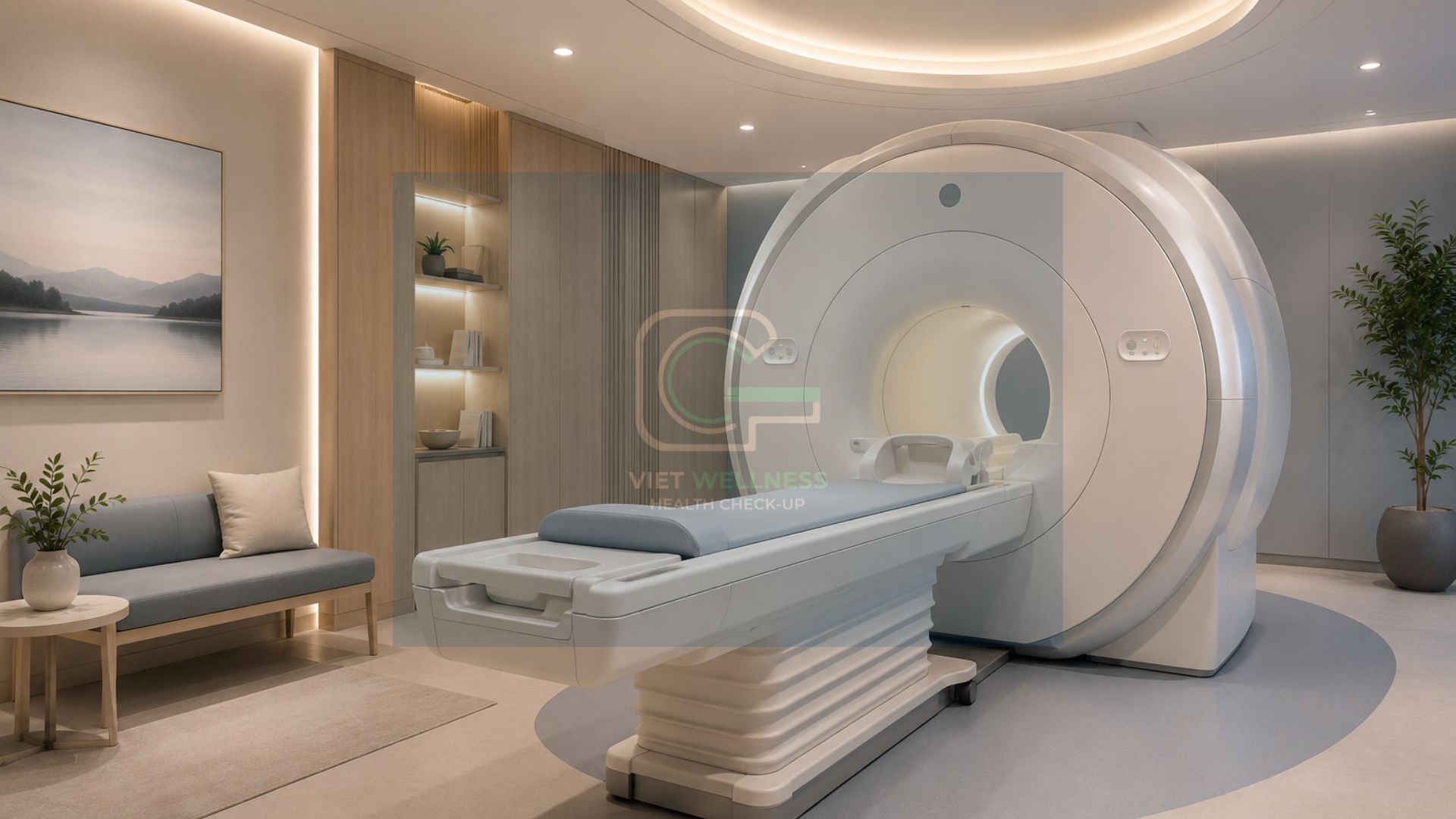
During the scan, you lie on a padded table that moves slowly through a large, tube-shaped machine. Inside, magnetic fields and radio waves are used to generate cross-sectional images of your tissues and organs, which a radiologist reviews afterward.
A whole-body MRI does not use ionizing radiation like X-rays or CT scans, which is one reason it is often considered for preventive screening. Depending on the protocol, the scan may be performed with or without contrast, a substance that can make certain tissues easier to see. Whether contrast is appropriate depends on your health background, including kidney function and any allergies, and should be reviewed with a doctor-led team before your appointment.
What Can a Whole-Body MRI Actually Show?
Depending on the protocol, a whole-body MRI may include a review of areas such as:
Brain and neurovascular structures
Neck and surrounding soft tissues
Chest
Abdomen, including the liver, kidneys, pancreas, spleen, and gallbladder
Pelvis
Spine, bones, and surrounding soft tissues
Findings in these areas may help identify abnormalities that support earlier follow-up with the right specialist. What is reviewed always depends on the specific protocol chosen, and not every condition can be assessed this way.
What a Whole-Body MRI Cannot Replace
A whole-body MRI has unique strengths that other screening tools cannot fully replace. It can examine many deep organs and tissues in one session without ionizing radiation, offering a broad structural overview of the brain, spine, liver, pancreas, kidneys, pelvis, bones, bone marrow, soft tissues, and lymph nodes.
It may help identify abnormalities such as tumors, organ lesions, inflammatory changes, marrow abnormalities, and soft-tissue findings that may not be seen on routine check-ups or blood tests.
However, whole-body MRI is not equally sensitive for every organ system, and it cannot replace tests that are specifically designed for certain areas.
For the bowel and stomach, MRI may sometimes detect large masses, wall thickening, or advanced disease, but it is not the best test for early mucosal lesions, small polyps, ulcers, gastritis, or early colorectal cancer. Endoscopy and colonoscopy remain the gold-standard examinations because they allow direct visualization, biopsy, and polyp removal.
For the lungs, MRI is limited in detecting small pulmonary nodules, calcifications, or fine lung-detail abnormalities. Chest CT is much more sensitive for lung screening and detailed lung assessment.
For the heart and blood vessels, a whole-body MRI does not replace dedicated cardiovascular evaluation. Conditions such as coronary artery disease, coronary calcification, valve disease, arrhythmia, or cardiac function problems may require ECG, echocardiography, CT coronary angiography, coronary calcium scoring, cardiac MRI, or cardiology consultation, depending on the concern.
For the breasts, whole-body MRI may incidentally show some breast abnormalities, but it is not a substitute for proper breast screening. Mammography is better for detecting microcalcifications, while breast ultrasound and dedicated breast MRI provide more focused assessment when indicated.
Whole-body MRI also cannot replace blood tests, because blood tests assess things that imaging cannot show directly, such as liver and kidney function, blood sugar, cholesterol, infection, inflammation, anemia, hormones, and certain tumor markers.
Therefore, whole-body MRI should be considered a broad structural screening tool, not a single test that replaces all other investigations. The most complete preventive health approach is usually a combination of whole-body MRI, blood tests, and selected organ-specific tests based on age, symptoms, personal risk factors, and family history.
Benefits of Whole-Body MRI Screening
For people who want a wider view of their health in a single visit, whole-body MRI screening may offer several advantages:
Provides a broad structural overview of multiple deep organs and tissues in one appointment, including areas such as the brain, spine, liver, pancreas, kidneys, pelvis, bones, bone marrow, soft tissues, and lymph nodes
Uses no ionizing radiation, which some people prefer for a recurring preventive option
May help identify abnormalities that are not yet causing symptoms, which can prompt earlier follow-up with the right specialist
Can be paired with a wellness blood panel for a more complete preventive health overview
Fits into a single, well-coordinated visit, useful for busy professionals, overseas Vietnamese, and short-stay travelers
Limitations to Understand Before You Book
Like any screening tool, whole-body MRI has limitations. It may not detect every condition, and some findings may be incidental or not clinically significant. Any abnormal or unclear result should be reviewed by a licensed doctor and, when needed, followed by organ-specific tests.
MRI suitability also depends on your health background, implants, devices, pregnancy status, claustrophobia, and whether contrast is being considered. This is why a pre-scan health review is important before booking.
Who May Consider Whole Body MRI Screening?
Whole-body MRI screening is often considered by busy professionals who want an efficient preventive check, overseas Vietnamese combining a visit to Vietnam with a health screening, expats seeking trustworthy English-supported private healthcare, people with a family history of certain conditions who want early clarity, and short-stay travelers who want a meaningful screening in one visit.
This is general guidance, not a personal recommendation. Whether whole-body MRI is a good fit for you depends on your personal and family health history, which is best discussed with a doctor-led care team.
Who May Want to Wait or Ask a Doctor First?
Whole-body MRI is not automatically the right starting point for everyone. People who are currently experiencing symptoms, have certain implants or medical devices, are pregnant, or have specific health conditions should speak with a doctor first to understand whether MRI is suitable for them and whether contrast would be appropriate.
A doctor-led team can help you think through whether a whole-body MRI fits your current situation or whether a different type of evaluation should come first.
What to Expect: Before, During, and After Your Scan
Most whole-body MRI appointments follow a similar pattern. Beforehand, expect questions about your medical history, implants or devices, allergies, and whether contrast may be used. The scan itself usually takes longer than a single-region MRI, since multiple areas are imaged in sequence, which is why whole-body MRI appointments are often scheduled with extra time.
Afterward, your images are reviewed by a radiologist, and results are typically explained to you by a doctor who can put any findings into context. Wearing comfortable clothing, arriving without metal accessories, and following any preparation instructions can help your appointment go smoothly.
How Long Does a Whole-Body MRI Take?
A whole-body MRI usually includes about 15 minutes of preparation and approximately 1 hour of scanning time.
Preparation may include MRI safety screening, changing into suitable clothing if needed, removing metal items, and confirming whether contrast or any additional tests are required. The scan itself is longer than a single-region MRI because multiple body areas are imaged in sequence.
Your total appointment time may be longer than the scan time, especially if your visit includes registration, blood testing, private transfer, or a results explanation. At VietWellness Tour, the schedule is coordinated in advance so international patients and short-stay travelers can plan their screening more easily.
What Makes Whole-Body MRI Screening Different with VietWellness Tour?
Instead of booking an MRI on your own and navigating an unfamiliar healthcare system, VietWellness Tour helps you move through the entire process, from your first inquiry to your results discussion, with clarity, privacy, and doctor-led support in Ho Chi Minh City:
Doctor-led coordination from your first inquiry through your results discussion
Senior radiologist review of your imaging for an extra layer of clinical oversight
A premium screening experience based in Ho Chi Minh City, with concierge support throughout your visit
Bilingual support in English and Vietnamese at every step
Fast-track scheduling for short-stay travelers and busy schedules
MRI safety screening to check your suitability for the scan before your appointment
Digital copies of your report and image files for your records or your home doctor
A doctor-led explanation of your results, not just a printed report
An optional wellness recovery experience to pair with your screening visit
This combination is designed to make whole-body MRI screening practical and reassuring for expats living in Vietnam, overseas Vietnamese visiting after years away, and short-stay travelers who want a meaningful screening that fits into one trip.
How Much Does a Whole Body MRI Cost in Vietnam?
The cost of a whole-body MRI in Vietnam depends on several factors: the imaging protocol, which body regions are included, whether contrast or blood testing is needed, the facility and equipment used, and the level of concierge support included with your visit.
At VietWellness Tour, full-body MRI packages start from USD 765. This usually includes more than the scan itself, such as appointment coordination, private English-language support, hotel pickup and return transfer, hospital coordination, full MRI files, a detailed radiology report, and a health explanation based on your MRI results.
Because pricing depends on your screening goal, health background, selected package, and any recommended add-ons, the most accurate next step is to talk to a medical coordinator before you decide.
For a detailed breakdown, read our guide to [whole-body MRI cost in Vietnam](/blog/whole-body-mri-cost-in-vietnam).
Frequently Asked Questions
Does a whole-body MRI use radiation?
No. A whole-body MRI uses magnetic fields and radio waves rather than ionizing radiation, which is different from CT scans or X-rays.
Does your whole body go into the MRI machine?
For many whole-body MRI protocols, you move through the scanner in stages so each region can be imaged. The table moves slowly, and most people find the process more comfortable than expected, especially with guidance from the care team beforehand.
How long does a whole-body MRI take?
A whole-body MRI usually includes about 15 minutes of preparation and approximately 1 hour of scanning time. Your total visit may be longer if it includes registration, blood tests, transfer time, or a doctor-led explanation of your results.
Is a whole-body MRI worth it?
Whether a whole-body MRI is worth it depends on your personal health background, goals, and expectations. For some people, the appeal is having a broader view of their health in one visit; for others, a more targeted scan or routine check-up may be a better starting point. A doctor-led team can help you weigh this.
Is a whole-body MRI covered by insurance?
Coverage varies by provider and policy, and preventive screening like this is often self-pay. If insurance coverage matters to you, it is worth checking with your provider before booking. Our coordinators can help you understand what is typically included in a screening package.
Plan Your Whole-Body MRI Screening in Ho Chi Minh City?
Whole-body MRI screening is not right for everyone. If you are comparing options in Vietnam, VietWellness Tour can help you understand the scan process, what is included, how long the visit may take, and what you will receive after your results are ready.
Talk to a medical coordinator before you decide.
Medical Disclaimer
This content is for educational purposes only and does not replace medical diagnosis or treatment. Final interpretation of any MRI results should be provided by licensed medical professionals.
Medical References
Related Guides
If you are still comparing options, these guides may help you plan your screening with more confidence:
Whole-Body MRI Cost in Vietnam: What Affects the Final Price?
Whole-Body MRI in Ho Chi Minh City: What International Patients Should Know
Is a Whole-Body MRI Worth It? Benefits, Limits, and What to Consider
How Long Does a Whole-Body MRI Take? Scan Time, Appointment Time, and Results
Whole-Body MRI for Cancer Screening: What It Can and Cannot Do
Does Your Whole Body Go Into the MRI Machine? What to Expect
VIETWELLNESS TOUR
Plan Your Full-Body MRI
Doctor-led preventive MRI screening in Ho Chi Minh City, Nha Trang, Da Nang, and Ha Noi.
- Senior radiologist-led MRI review
- Hotel pickup & English-speaking concierge
- Results within 24 hours + full MRI files & report
