

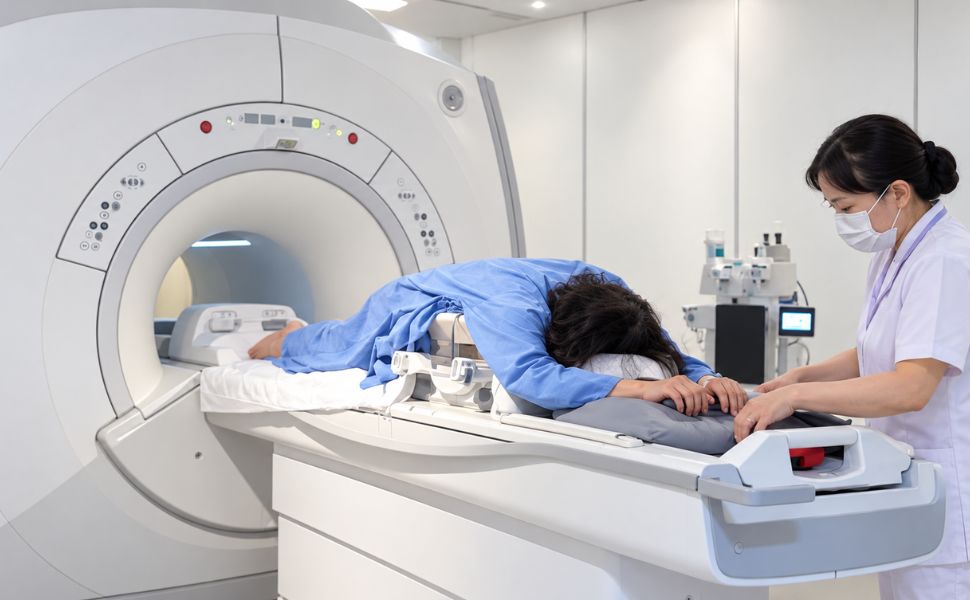
Not every woman needs breast MRI screening. It's a specific test for a specific group of patients, and if your doctor has brought it up, or you're trying to figure out whether to ask for one yourself, it helps to understand what it actually adds beyond a mammogram. Like whole-body MRI, breast MRI uses magnetic fields and radio waves instead of X-rays, so there's no radiation involved. The scan itself takes about 30 to 40 minutes, though your full visit will run longer once you count preparation and positioning. If breast cancer screening is part of a health check you're planning in Vietnam, our breast cancer screening page covers how it fits into a full workup.
What Is Breast MRI, and How Is It Different From a Mammogram?
How breast MRI works
Breast MRI relies on the same core technology as any other MRI scan: a strong magnet and radio waves that build detailed images of soft tissue, with no ionizing radiation involved. Most breast MRI exams also use an intravenous contrast dye called gadolinium. It highlights how tissue behaves over time, since healthy tissue and tumors take up and release the dye at different rates. That difference is a big part of what makes MRI so sensitive to small or unusual changes.
Why it's used alongside mammograms and ultrasound, not instead of them
Breast MRI doesn't replace mammography or ultrasound. Each method picks up something different. Mammograms remain the standard first-line screening tool and are particularly good at catching microcalcifications. Ultrasound works well on dense tissue and for guiding biopsies. MRI has the highest sensitivity of the three, especially in dense breast tissue and in patients at higher risk, but it was never designed to stand alone. Doctors combine these tools based on a patient's individual risk profile and prior results.
Who Actually Needs Breast MRI Screening
Breast MRI screening is generally reserved for women with a higher-than-average lifetime risk of breast cancer, not the general population. That includes:
A known BRCA1 or BRCA2 mutation, or other high-risk genetic mutations such as TP53 or PTEN
A strong family history of breast or ovarian cancer, particularly in a first-degree relative
A history of chest radiation therapy at a young age
Extremely dense breast tissue (BI-RADS density category D), where mammograms are least effective
The benefit in each of these cases is the same: catching something small enough, early enough, that it's still highly treatable.
Why Dense Breast Tissue Changes the Picture
Dense breast tissue can hide tumors on a mammogram much the way snow hides a snowball. Both show up white on the image. A large randomized trial known as the DENSE trial, published in the New England Journal of Medicine, tracked women with extremely dense breasts and normal mammogram results. Among those who went on to have the additional MRI, the rate of interval cancers (cancers found between scheduled screenings) came in at more than 80% lower than among women screened with mammography alone. Across everyone invited to add MRI, including those who didn't end up going, the overall reduction was closer to 50%, since not everyone who's offered the extra scan takes it. Either way, the direction is clear: for this specific group, adding MRI catches cancers mammography alone misses.
If you're not sure which risk category applies to you, that's a question for your doctor rather than something to self-diagnose from a checklist. It's still worth raising directly at your next screening visit.
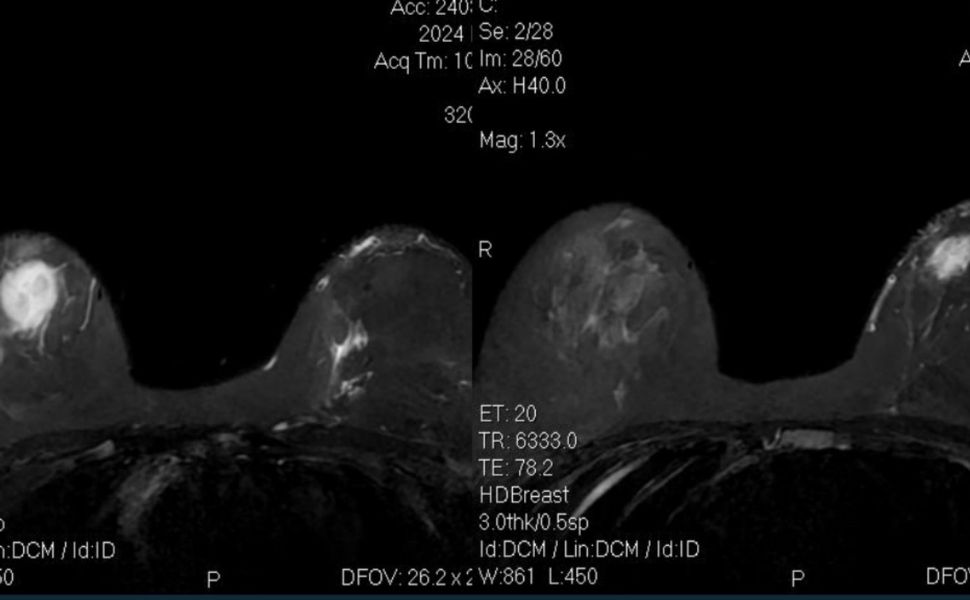
Breast MRI vs Mammogram vs Ultrasound: How They Compare
Mammogram | Ultrasound | Breast MRI | |
Uses radiation? | Low-dose X-ray | No | No |
Sensitivity in dense breast tissue | Lower | Moderate | Highest |
Typical use | First-line screening | Follow-up, guiding biopsy | High-risk screening, unclear findings |
Needs contrast dye? | No | No | Usually yes |
Typical scan time | A few minutes | 15 to 30 minutes | About 30 - 40 minutes |
None of these three tests replaces the others. They work together based on what a patient's risk and prior results actually call for. A radiologist reading all three in context, rather than any single scan on its own, is what drives an accurate result.
Other Reasons Breast MRI Is Used, Beyond Screening
Risk-based screening is the reason most people first hear about breast MRI, but it's not the only reason a radiologist reaches for it. For patients already working with an oncologist or breast surgeon, breast MRI also plays a role in:
Staging before surgery. Mapping the full extent of a diagnosed tumor, including whether it's affecting more than one area of the breast, to help plan the right surgical approach.
Tracking response to chemotherapy given before surgery. When chemotherapy is used to shrink a tumor first, MRI helps show how well it's working and whether the treatment plan needs adjusting.
Finding a hidden primary tumor. Occasionally cancer turns up in a lymph node under the arm before it's visible on a mammogram or ultrasound. MRI can help locate the original tumor in the breast.
Telling scar tissue apart from a true recurrence after a lumpectomy or mastectomy, a distinction that's often hard to make on other imaging alone.
Following up on higher-risk findings from a prior biopsy, such as atypical ductal hyperplasia, to check for related changes nearby.
Planning breast-conserving surgery, helping confirm a tumor can be fully removed while keeping as much healthy tissue as possible.
These uses are typically ordered by an oncologist or surgeon as part of a treatment plan already underway, rather than something a patient requests on their own. If any of this applies to you, it's worth asking your care team directly whether MRI fits into your specific plan.
Is the Contrast Dye (Gadolinium) Used in Breast MRI Safe?
Most breast MRI protocols use a gadolinium-based contrast agent to make tissue changes easier to see. The FDA has stated that gadolinium retention in the body has not been directly linked to adverse health effects in patients with normal kidney function, and that the benefits of contrast-enhanced imaging continue to outweigh the risks for most patients. Before any contrast is given, your care team reviews:
Kidney function, since contrast is used cautiously or avoided in patients with significant kidney impairment
Any prior allergic reaction to contrast dye
Pregnancy status, because gadolinium is avoided during pregnancy unless it's essential
Clinics also tend to favor a specific category of gadolinium agent, called macrocyclic, over older alternatives, since it's generally regarded as having a stronger safety profile, which matters most for patients who may need repeat scans over the years.
Breastfeeding is not a reason to avoid contrast. Only a tiny amount of gadolinium passes into breast milk, and most guidelines consider it safe to keep nursing as normal afterward. If you'd simply feel more comfortable pausing for 12 to 24 hours, that's a personal choice to discuss with your doctor, not a medical requirement.

What to Expect During a Breast MRI Scan
Before the scan
You'll be asked about your medical history, including any implants, prior breast surgery, kidney function, and whether you could be pregnant. All metal objects and electronics come off before you enter the scan room. For the clearest images, breast MRI is usually scheduled for days 7 to 14 of the menstrual cycle in premenopausal women, since hormonal changes earlier or later in the cycle can affect how clear the images turn out.
During the scan
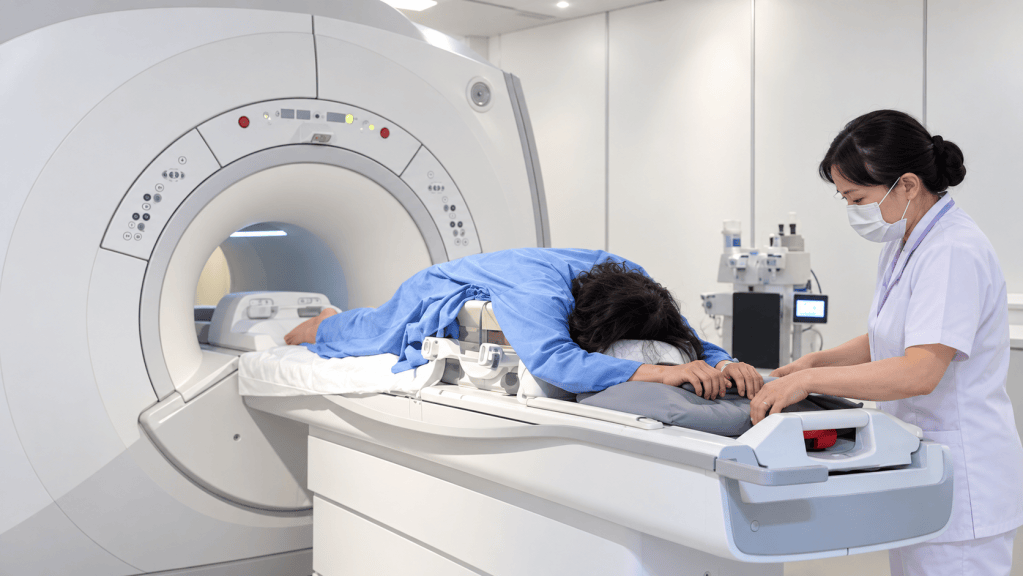
You'll lie face-down, with each breast positioned in a dedicated coil built to keep the image sharp and steady. There's no compression, unlike a mammogram. Both breasts are scanned together in the same session, even if only one side is a concern, since comparing them side by side helps the radiologist judge what's normal for you. The machine captures several types of images over about 30-40 minutes, some before and some after the contrast injection. That 30-40 minutes covers the imaging itself; with check-in, the history review, and getting positioned, plan for your full visit to take somewhat longer. You're never left alone. Your technologist can see you, hear you, and talk with you the whole time.
When Breast MRI Isn't Recommended (Safety Considerations)
Breast MRI is very safe for most patients, but it isn't automatically the right choice for everyone. Your care team will check for:
Pacemakers, defibrillators, or other implanted devices not labeled MRI-safe
Certain metal implants or fragments that aren't compatible with MRI
Severe claustrophobia, though positioning options, sedation, and support are available for most patients
Reduced kidney function, which affects whether contrast dye can be used safely
Pregnancy: non-contrast MRI is generally considered lower-risk when it's clinically necessary, but contrast is avoided unless essential
Being upfront about your full medical history before booking is what lets your radiology team plan the right protocol, or recommend a different type of imaging if MRI isn't the right fit for you.
Breast MRI in Vietnam: Process & Cost
Process:
Initial consultation to review your risk factors and medical history
Scheduling, timed to the right point in your cycle when applicable
The scan itself, about 30-40 minutes, plus check-in and preparation time
Radiologist review and BI-RADS classification of any findings
Follow-up consultation to discuss results and, if needed, next steps such as a targeted ultrasound or biopsy
Cost:
Pricing depends on the facility, whether contrast dye is used, and what additional imaging is included, so we don't quote a single fixed number here. As a general reference point, contrast-enhanced MRI scans, such as breast MRI, at international-standard hospitals and clinics in Vietnam typically run around $250 to $500 USD (roughly 6.5 to 13 million VND). That's still meaningfully lower than comparable scans in the US, UK, or Australia, which commonly run $1,000 to $3,000 (a breast MRI specifically averages close to $950 in the US without insurance). Reach out to our team for a quote based on your specific screening needs.
Frequently Asked Questions (FAQ)
1. Who should get a breast MRI instead of just a mammogram?
Breast MRI is typically recommended in addition to a mammogram, not instead of it, for women at higher-than-average risk. That includes anyone with a BRCA1/2 mutation or other high-risk genetic profile, a strong family history of breast or ovarian cancer, prior chest radiation at a young age, or extremely dense breast tissue. It's not a routine substitute for mammography in average-risk patients.
2. Is breast MRI more accurate than a mammogram?
Breast MRI has the highest sensitivity of the three main breast imaging methods, especially in dense breast tissue. Higher sensitivity also comes with more false positives in some cases. That's why it's used alongside mammography and ultrasound rather than as a standalone replacement. Each method contributes something different.
3. Does breast MRI use radiation?
A: No. Breast MRI uses magnetic fields and radio waves, not X-rays or any form of ionizing radiation. It's the same non-ionizing technology used in whole-body MRI.
4. Is the contrast dye used in breast MRI safe?
Most breast MRI scans use a gadolinium-based contrast dye. The FDA states that gadolinium retention hasn't been directly linked to adverse health effects in patients with normal kidney function, and that the benefits continue to outweigh the risks for most people. Your care team reviews kidney function, allergy history, and pregnancy status before deciding whether contrast is appropriate for you.
5. Is breast MRI only used for screening high-risk patients?
No. Beyond screening, breast MRI is also used for patients already diagnosed with breast cancer, to stage a tumor before surgery, track how well chemotherapy is shrinking a tumor before an operation, tell scar tissue apart from a recurrence after treatment, or help plan breast-conserving surgery. These uses are typically ordered by an oncologist or surgeon rather than requested directly by a patient.
6. How often should high-risk women get breast MRI screening?
Guidelines generally recommend annual MRI screening combined with annual mammography for women confirmed to be at high lifetime risk. The right interval depends on individual risk factors, so it should be set with your doctor rather than treated as a fixed rule.
7. Can I get a breast MRI if I have breast implants?
Yes. MRI is actually considered the most reliable way to detect a silent implant rupture, which often causes no symptoms at all. This uses a separate, modified scan protocol, sometimes without contrast dye, specifically designed to evaluate implants rather than the standard cancer-screening protocol.
8. Is breast MRI painful?
No. The scan itself isn't painful. You lie face-down for about 30-40 minutes while the machine takes images, and some patients feel a brief cool sensation when the contrast is injected. The main challenge for some people is staying still or managing the enclosed feeling of the scanner, and your care team can help with that.
9. What happens if something is found on a breast MRI?
Findings are classified using the BI-RADS system, which ranges from no findings to highly suggestive of malignancy. Depending on the result, your doctor may recommend a targeted follow-up ultrasound, short-term monitoring, or a biopsy to get a definitive answer. An abnormal finding on MRI doesn't automatically mean cancer. It means further evaluation is needed to know for certain.
10. How much does a breast MRI cost in Vietnam?
A: Pricing varies by facility and whether contrast dye is used. At international-standard hospitals and clinics in Vietnam, a contrast-enhanced scan like breast MRI typically runs around $250 to $500 USD, compared to $1,000 to $3,000 for a comparable scan in the US, UK, or Australia. Contact our team for a quote based on your specific screening needs.
11. Can I have a breast MRI if I'm claustrophobic?
Yes. Options include feet-first positioning, an eye cover to reduce the sense of confinement, music during the scan, and mild sedation for significant anxiety. You're never left alone, and your technologist can see, hear, and talk with you throughout. Let your care team know about any anxiety beforehand so they can plan the right approach for you.
Key Takeaway
Breast MRI is a highly sensitive tool for a specific group of patients: those with higher genetic or family-history risk, extremely dense breast tissue, or an existing diagnosis that needs staging or monitoring. It's not a routine test for everyone. It doesn't use radiation, and any contrast dye is carefully screened against your kidney function, allergy history, and pregnancy status beforehand. An MRI finding is also never the final word on its own; a biopsy is what confirms a diagnosis. Whether breast MRI is right for you, and why, is ultimately a decision to make with your doctor, based on your own risk profile and medical history.
VIETWELLNESS TOUR
Plan Your Full-Body MRI
Doctor-led preventive MRI screening in Ho Chi Minh City, Nha Trang, Da Nang, and Ha Noi.
- Senior radiologist-led MRI review
- Hotel pickup & English-speaking concierge
- Results within 24 hours + full MRI files & report
