

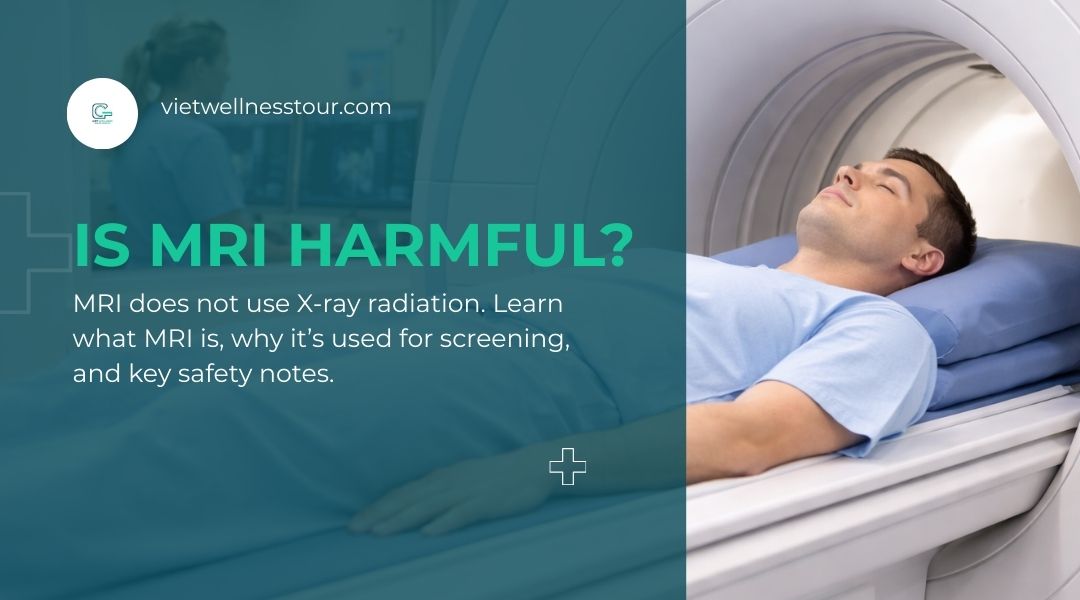
Medical imaging often raises an immediate question: is it safe?
MRI is a common source of concern, especially for people who associate scans with radiation exposure. Because MRI machines look large, complex, and unfamiliar, it is easy to assume they work in the same way as X-rays or CT scans.
This article clarifies that assumption. It explains how MRI works, whether it uses radiation, and what safety considerations matter most. The goal is not to promote or discourage MRI, but to provide clear, factual context so readers can better understand where MRI fits within preventive health and screening discussions. At Viet Wellness Tour, this question comes up often from international patients considering whole-body MRI screening in Ho Chi Minh City. Because our service is doctor-led — every scan is personally reviewed by Dr. Nguyen Ho Truc Linh, our Senior MRI Doctor — we think it's worth explaining the science clearly before you ever book a consultation.
Why People Worry About MRI Safety
MRI is often grouped with other medical imaging tests
In everyday conversation, MRI is often mentioned alongside CT scans and X-rays. All three are described as “scans,” and they are commonly ordered in hospital settings. This grouping makes it easy to assume that they share the same underlying risks.
For many people, the word “scan” is closely linked to radiation. Over time, this association has shaped public understanding, even though different imaging tools operate in very different ways. When MRI is viewed through the same lens as radiation-based imaging, safety concerns naturally follow.
Fear driven by unfamiliar technology
MRI technology is not intuitive. The machine is large, the process can be noisy, and the environment may feel enclosed. For someone encountering it for the first time, these elements can feel intimidating, even before any technical details are considered.
Unfamiliarity often creates uncertainty. When people do not clearly understand how a technology works, concerns about potential harm can fill that gap. This reaction is understandable, but it highlights the importance of separating appearance and experience from the actual mechanisms involved.
Does MRI Use Radiation?
What people usually mean by “radiation”
When people ask whether MRI uses radiation, they are usually referring to ionizing radiation. This is the type of radiation used in imaging methods such as X-rays and CT scans. Ionizing radiation has enough energy to alter atoms in the body, which is why exposure levels and frequency are carefully managed in medical settings.
Because X-rays and CT scans are widely known, many people assume that all imaging technologies work on the same principle. This assumption is common, but it is not accurate.
How MRI actually works
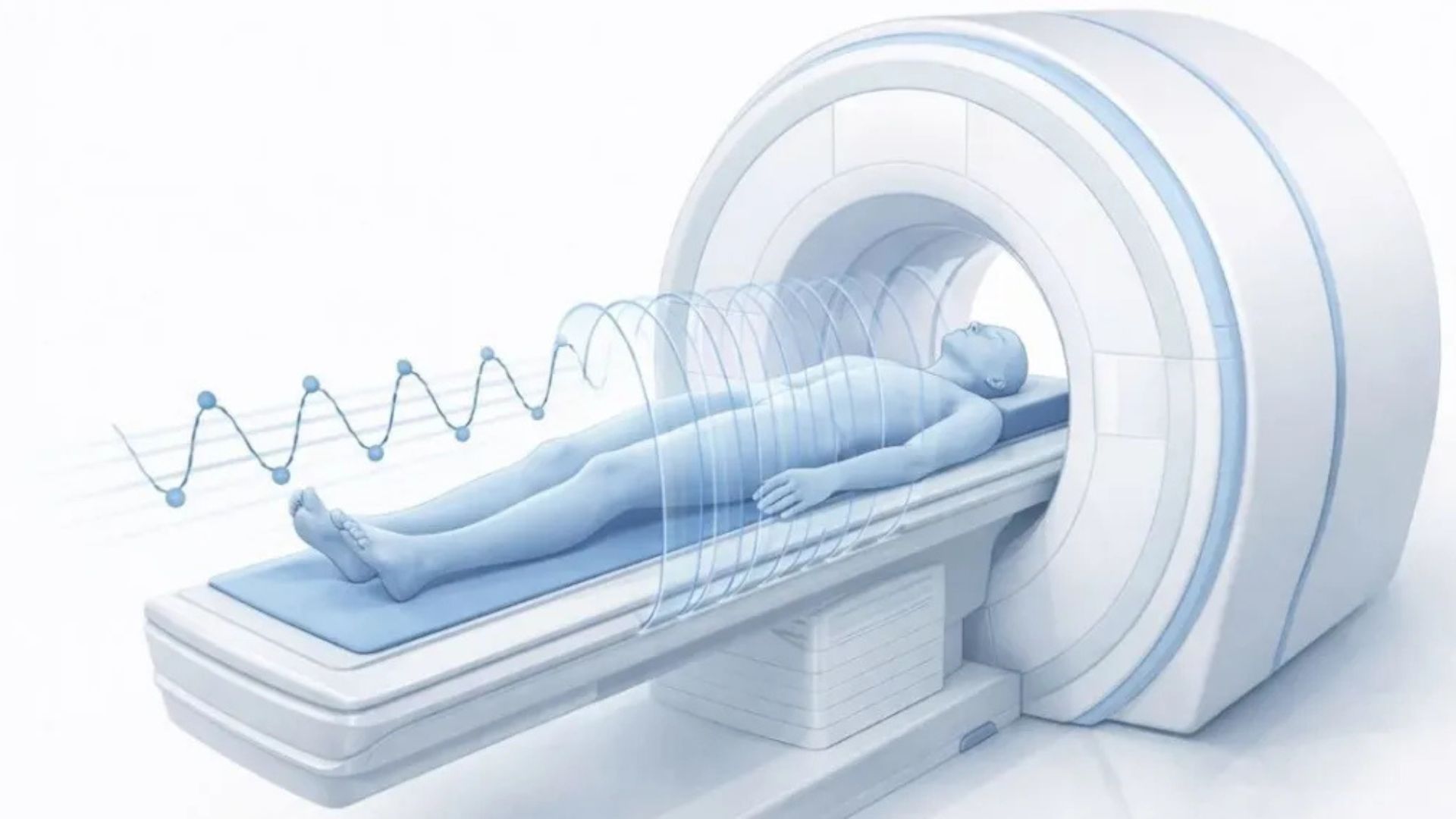
MRI does not use ionizing radiation.
Instead, MRI relies on a combination of strong magnetic fields and radio waves. This is confirmed by the U.S. Food and Drug Administration (FDA), which classifies MRI as a non-ionizing imaging technology, distinct from X-ray and CT, which use ionizing radiation. These elements interact with the body in a different way from X-rays or CT scans. The magnetic field aligns certain particles in the body, and radio waves are then used to generate signals that can be processed into detailed images.
This difference in technology is fundamental. While MRI still requires strict safety protocols and professional oversight, its imaging process does not involve exposure to X-ray radiation.
Understanding this distinction helps explain why MRI is often discussed separately from radiation-based imaging when safety questions arise.
MRI Compared to CT and X-Ray (High-Level)
Key difference in imaging technology
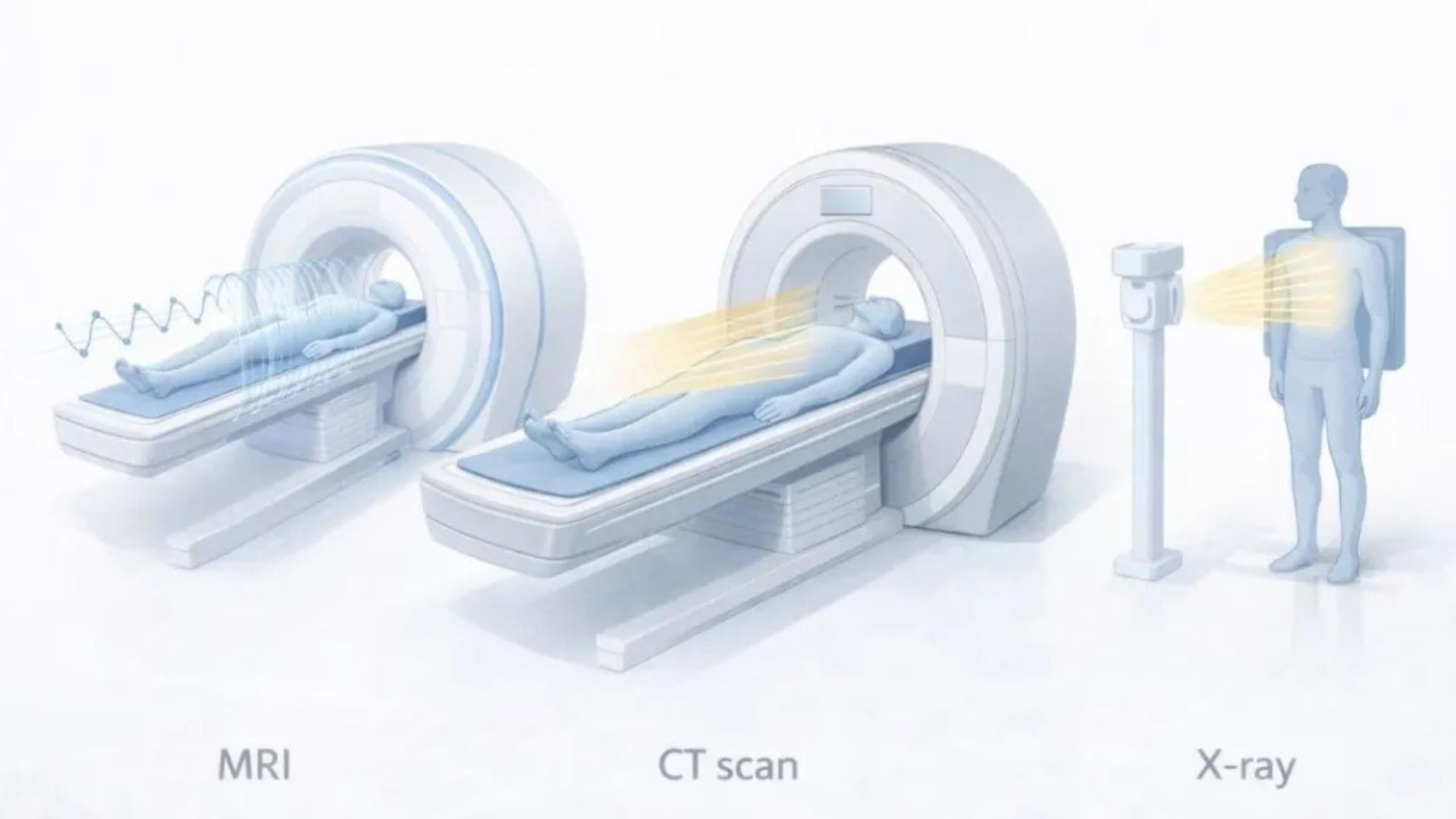
Although MRI, CT, and X-ray are all used to create images of the body, they rely on very different technologies.
CT scans and X-rays use ionizing radiation to produce images. This radiation passes through the body and is detected on the other side, allowing structures to be visualized based on how much radiation they absorb.
MRI, by contrast, does not use ionizing radiation at all. Its images are generated through magnetic fields and radio waves, which interact with the body in a fundamentally different way. Because of this, MRI is not grouped with CT or X-ray when discussions focus specifically on radiation exposure.
This distinction is central to understanding why MRI is often perceived differently from other imaging tools.
Feature | MRI | CT Scan | X-Ray |
|---|---|---|---|
Uses ionizing radiation? | No | Yes | Yes |
How it works | Magnetic fields + radio waves | X-rays from multiple angles | Single X-ray beam |
Best for | Detailed soft-tissue imaging, repeatable/preventive screening | Fast imaging, trauma, bone + organ detail | Bone fractures, chest imaging |
Typical scan time | 20–60 minutes | A few minutes | A few seconds |
If you're weighing MRI against CT for a specific concern like stroke, see how MRI and CT compare for stroke screening.
Why this difference matters in preventive contexts
In preventive or monitoring contexts, concerns about cumulative radiation exposure sometimes influence how imaging options are considered.
Because MRI does not rely on ionizing radiation, it is often discussed as an option in situations where repeated imaging may be considered over time. This does not mean MRI is always appropriate, or that it replaces other imaging methods. It simply reflects how differences in technology shape discussions about risk, exposure, and long-term planning.
At this level, the comparison is about principle, not preference. Each imaging method exists for specific reasons, and their use depends on clinical context rather than a single safety factor.
Why MRI Is Used for Screening and Monitoring
Detailed imaging without radiation exposure
One reason MRI is often discussed in screening or monitoring conversations is its ability to produce detailed images without using ionizing radiation.
MRI can capture fine structural detail in certain parts of the body, which can be helpful when clinicians want a clearer picture over time. Because this imaging does not involve X-ray radiation, it is sometimes considered in situations where repeated observation may be part of longer-term health planning.
This does not mean MRI is used to make decisions on its own. The value lies in the information it can provide, not in replacing clinical judgment or diagnostic evaluation.
When MRI is considered in proactive health planning
In proactive health discussions, MRI is sometimes mentioned when symptoms are absent but additional visibility is desired.
This consideration is based on context. Factors such as medical history, risk profile, and the specific question being explored all matter. MRI is not a default choice, and it is not appropriate for everyone. It is one tool among many, used selectively when its characteristics align with the situation.
Framing MRI this way helps keep expectations realistic. It is not about reassurance or prediction, but about understanding how different tools may contribute to a broader picture when used thoughtfully.
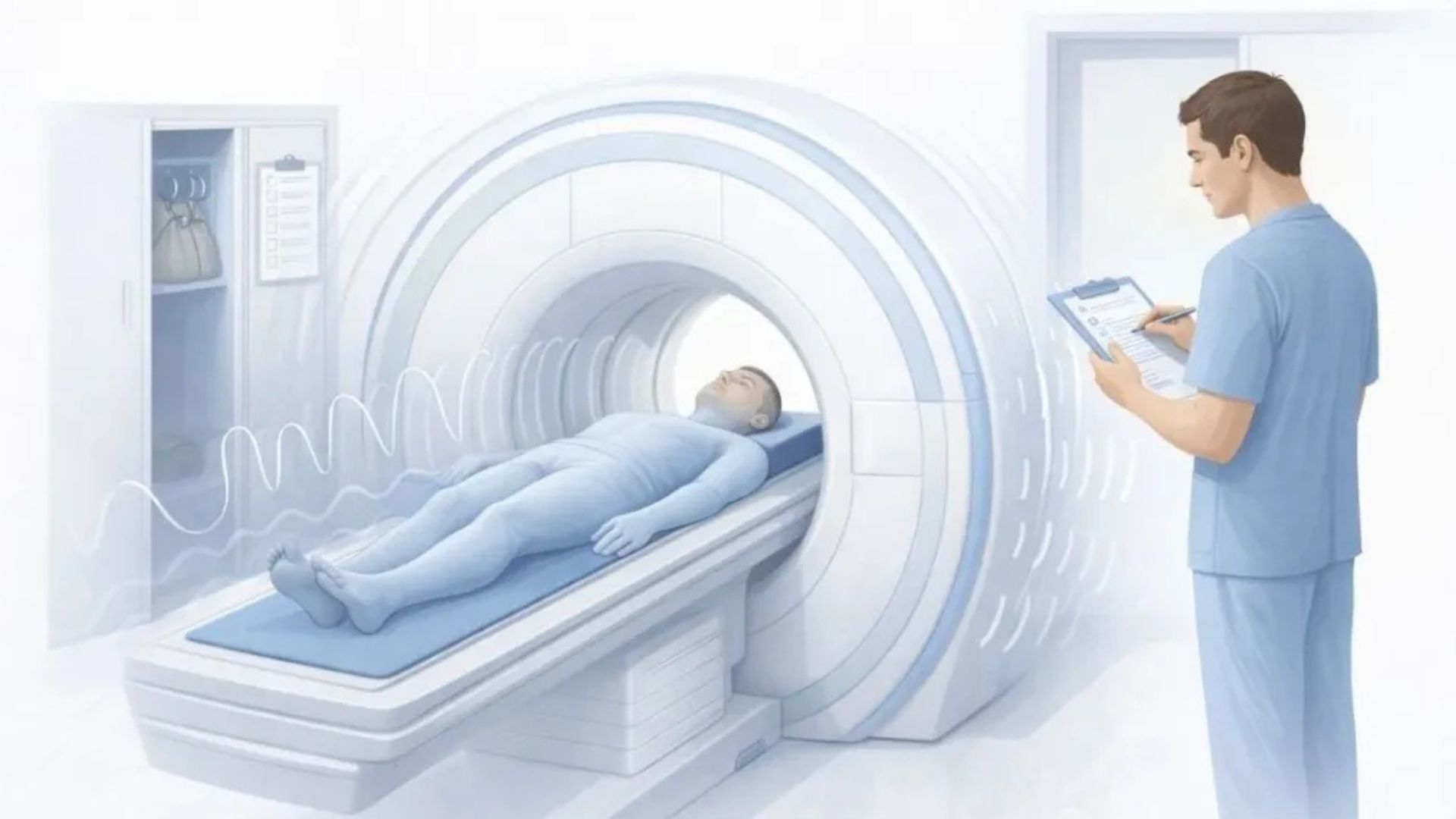
Important MRI Safety Considerations
Metal implants and medical devices
While MRI does not use ionizing radiation, it does involve strong magnetic fields. Because of this, the presence of certain metal objects or implanted devices is an important safety consideration.
Some medical implants, surgical clips, or electronic devices can interact with the magnetic field. This is why people are routinely asked about pacemakers, implants, or prior surgeries that may have involved metal. These questions are part of standard safety screening and are designed to ensure that MRI is used appropriately.
Having metal in the body does not automatically mean MRI cannot be performed. It means that additional review and professional assessment are needed before proceeding. Research published in the New England Journal of Medicine found no adverse events among more than 600 MRI exams performed on patients with cardiac devices not officially labeled "MRI conditional," when devices were checked before and after the scan and monitored throughout. This reinforces why full disclosure of your implant history matters before booking.
Is Gadolinium Contrast Dye Safe?
Some MRI scans, including contrast-enhanced breast MRI, use a gadolinium-based contrast agent (GBCA) to make certain tissues easier to see. According to the FDA, gadolinium retention in the body has not been directly linked to adverse health effects in patients with normal kidney function, and the benefits of contrast-enhanced imaging continue to outweigh the risks for most patients. Extra precautions apply for pregnant women, patients with reduced kidney function, and those needing multiple scans over their lifetime. Your care team will review your health history before deciding whether contrast is appropriate for your scan.
Why full disclosure before MRI matters
Clear communication before an MRI is essential.
Information about prior surgeries, implants, or medical devices helps healthcare professionals determine whether MRI is suitable and, if so, how it should be conducted safely. This process is not about creating barriers, but about matching the imaging method to the individual’s situation.
Understanding the reason behind these safety checks can help reduce uncertainty. They reflect the controlled and structured way MRI is used, rather than an inherent danger in the technology itself.
How Viet Wellness Tour Approaches MRI
Our MRI screening uses 1.5 Tesla Siemens/GE equipment — the same technology used in hospitals across the US, Singapore, and Australia. Before every scan, our team reviews your medical history and any implants or devices, following the same safety screening standards used internationally. Results, including your full MRI files and report, are reviewed personally by Dr. Nguyen Ho Truc Linh and delivered within 24 hours of your scan. If you're considering a whole-body MRI screening in Vietnam, you can read more about what's included in our concierge journey.
The MRI Experience: What to Expect
Noise, enclosed space, and duration
Beyond technical safety, the MRI experience itself can be a source of concern.
MRI machines are known for producing loud, repetitive sounds during imaging. The space inside the scanner can also feel enclosed, especially for people who are not comfortable in confined environments. In addition, an MRI typically requires lying still for a period of time, which may feel unfamiliar or uncomfortable for some.
These aspects are related to how the technology works, not to harm or risk. Understanding what the experience is like in advance can help reduce uncertainty and prevent assumptions that the sensations themselves indicate danger.
Why preparation helps
Much of the discomfort people associate with MRI comes from not knowing what to expect.
When the process is clearly explained beforehand, the experience often feels more manageable. Knowing that loud sounds and confined space are normal parts of the procedure can help people approach MRI with a calmer perspective.
This kind of preparation is about setting expectations, not encouraging or discouraging the use of MRI. It supports informed participation rather than fear-based reactions.
For a closer look at the process, see what actually happens inside the MRI machine and how long a whole-body MRI takes.
Is MRI Harmful Overall?
Separating radiation concerns from other considerations
The most common concern about MRI relates to radiation exposure. On that point, MRI is fundamentally different from X-ray–based imaging because it does not use ionizing radiation.
However, the absence of radiation does not mean MRI is entirely free of considerations. Factors such as implants, devices, and individual comfort still matter. Harm is not determined by a single characteristic, but by how a tool is used and whether it fits the person’s situation.
Looking at MRI this way helps move the conversation away from absolute labels like “safe” or “dangerous,” and toward a more nuanced understanding.
Why professional guidance remains essential
MRI is a powerful imaging tool, but it is not used in isolation.
Decisions about imaging are made within a broader clinical context that includes history, symptoms, and individual factors. Professional guidance helps ensure that MRI is used when appropriate and avoided when it is not.
This emphasis on context reinforces an important point: understanding how MRI works is helpful, but it does not replace medical judgment or individualized decision-making.
How to Think About MRI in Preventive Health
MRI as a tool, not a decision
MRI should be understood as a tool that provides information, not as a decision in itself.
Imaging does not answer every question, and it does not define a course of action on its own. Its role is to contribute to understanding, alongside other forms of evaluation and discussion.
Seeing MRI in this way helps prevent overreliance on technology and keeps attention on the broader process of health planning.
Placing MRI within a structured screening approach
In preventive health discussions, MRI is sometimes considered as part of a structured approach rather than a standalone solution.
When used thoughtfully, it fits into a sequence that may include screening, follow-up, and diagnostic evaluation if needed. This structured perspective helps clarify expectations and avoids treating any single test as definitive.
Understanding MRI within this framework supports more informed conversations and reduces confusion about what imaging can and cannot provide.
Key Takeaway
Questions about MRI safety are common, especially when imaging is associated with radiation in the public mind. Clarifying that MRI does not use ionizing radiation, while also recognizing its practical and safety considerations, helps create a more balanced understanding. When viewed as one tool within a structured preventive approach, MRI can be discussed calmly, without unnecessary fear or unrealistic expectations.
Next, you may want to know what a whole-body MRI costs in Vietnam.
FAQs – MRI Safety and Radiation
1. Does MRI use X-ray radiation like CT scans?
No. MRI does not use X-ray or ionizing radiation.
MRI works by using strong magnetic fields and radio waves to generate images, which is different from CT scans and X-rays that rely on ionizing radiation.
2. Is the gadolinium contrast dye used in some MRI scans safe?
Gadolinium-based contrast agents are used in certain scans, such as contrast-enhanced breast MRI, to make specific tissues more visible. The FDA states that gadolinium retention has not been directly linked to adverse health effects in patients with normal kidney function, and the benefits continue to outweigh the risks for most people. Extra precautions apply for pregnant women, patients with reduced kidney function, and those needing repeated scans. Your doctor will review this with you before your appointment.
3. Can I have an MRI if I have a pacemaker, ICD, or cochlear implant?
Many modern pacemakers, defibrillators, and cochlear implants are labeled "MRI conditional" and can be scanned safely under specific protocols. Studies show MRI can also be performed safely on patients with older, non-MRI-conditional cardiac devices when the device is checked before and after the scan and monitored throughout. Always share your full implant history with your care team before booking so they can plan the right protocol.
4. Can MRI be used multiple times without radiation concerns?
MRI does not expose the body to ionizing radiation.
However, whether repeated MRI scans are appropriate depends on clinical context, individual factors, and professional judgment, not on radiation considerations alone.
5. Are loud noises and enclosed spaces signs that MRI is unsafe?
No.
Loud sounds and confined space are normal aspects of how MRI machines operate. They are related to the technology, not to harm or danger, and do not indicate radiation exposure.
6. Why do MRI facilities ask about metal implants or past surgeries?
MRI uses strong magnetic fields, which can interact with certain metals or electronic devices.
Asking about implants or prior surgeries helps ensure MRI is used safely and appropriately for each individual.
7. Is MRI considered a diagnostic test or a screening tool?
MRI can be used in different contexts.
In some cases, it is part of diagnostic evaluation when symptoms exist. In other situations, it may be discussed within screening or monitoring conversations. The distinction depends on intent and clinical context.
8. Is MRI safe during pregnancy?
Non-contrast MRI is generally considered to carry no known risk to the fetus in the second and third trimester when clinically necessary, though most guidelines recommend caution and specialist consultation in the first trimester. Gadolinium contrast is avoided during pregnancy unless absolutely essential, since it crosses the placenta. If you are or might be pregnant, tell your doctor before scheduling any MRI, especially one with contrast.
9. What if I'm claustrophobic? Can I still get an MRI?
Yes. Common options include open or wide-bore MRI machines, feet-first positioning for certain scans, an eye cover to reduce the sense of confinement, music during the scan, a support person in the room when permitted, and mild sedation for significant anxiety. You're never left alone: your technologist can see, hear, and talk with you throughout the scan. Let your care team know about any anxiety beforehand so they can prepare the best option for you.
10. What is the most important takeaway about MRI safety?
MRI does not use ionizing radiation, but safety depends on proper use and context.
Understanding how MRI works helps reduce unnecessary fear while avoiding unrealistic expectations about what imaging alone can provide.
11. Is MRI radiation safety different for international patients screening in Vietnam?
No — the physics of MRI is the same everywhere. What differs is service quality: at Viet Wellness tour, scans use the same Siemens/GE 1.5T technology found in the US, Singapore, and Australia, with results personally reviewed by a senior MRI doctor and delivered within 24 hours
12. Can I get an English-language consultation about MRI safety before booking in Vietnam?
Yes. Viet Wellness Tour offers English-language consultation via WhatsApp with our medical team before you book, so you can ask safety questions and get a personalized quote before traveling.
VIETWELLNESS TOUR
Plan Your Full-Body MRI
Doctor-led preventive MRI screening in Ho Chi Minh City, Nha Trang, Da Nang, and Ha Noi.
- Senior radiologist-led MRI review
- Hotel pickup & English-speaking concierge
- Results within 24 hours + full MRI files & report
